

Benefits of Small Batch Roasting: 7 Key Advantages
Table of Contents
- Why Small Batch Roasting Delivers Better Coffee
- Small-Batch vs. Large-Scale Coffee Roasting
- Coffee Roasting Flavor Control: Precision at Every Stage
- How to Store Roasted Coffee Beans for Peak Freshness
- Choosing a Small-Batch Coffee Roaster for Home
- The Trade-Offs and Limitations of Small-Batch Roasting
- What Fresh Coffee From First and Ten Coffee Looks Like
- Frequently Asked Questions
Last Updated: October 12, 2026
Why Small Batch Roasting Delivers Better Coffee
Small batch roasting is the practice of roasting coffee in limited quantities, usually a few kilograms at a time, so the roastmaster can steer temperature, airflow, and timing through every stage of the roast. At First and Ten Coffee, we roast to order for exactly this reason: the smaller the batch, the more control you have over what ends up in the cup.
Below, we break down seven advantages, plus the trade-offs nobody mentions. First, a distinction: batch size is not a marketing label. It changes how heat moves through the beans, how evenly they develop, and how quickly they fade.
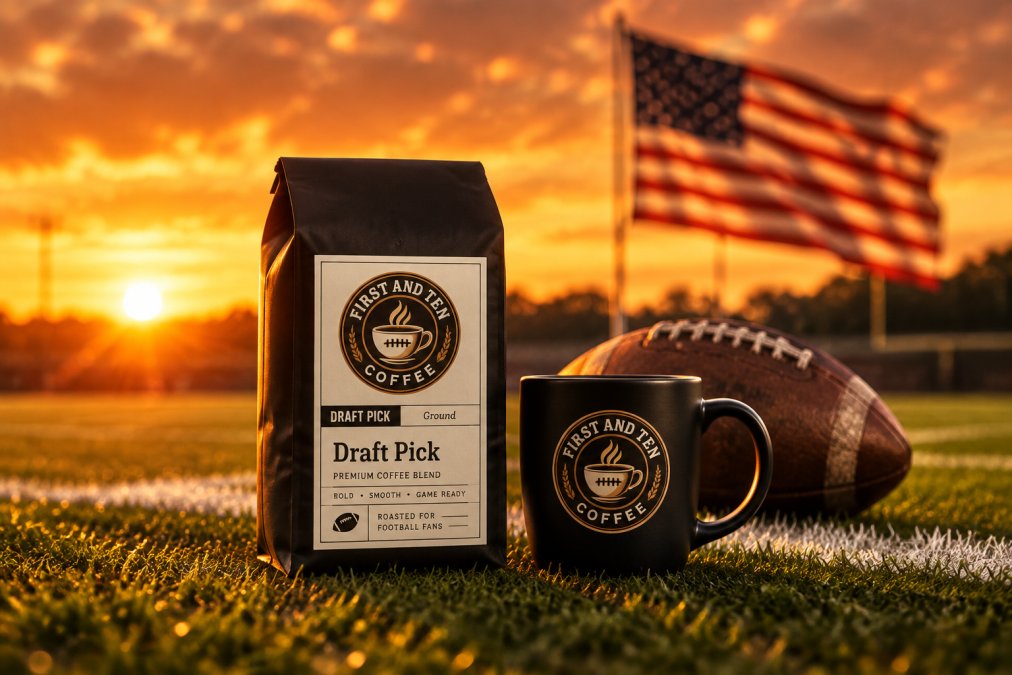
Small-Batch vs. Large-Scale Coffee Roasting
The core difference between small-batch and large-scale coffee roasting is feedback speed. A small roaster can taste, adjust, and re-roast within days.
That gap matters most when something changes. Green coffee is an agricultural product, so bean density and moisture shift from lot to lot and season to season.
There is a real trade-off here. Large roasters win on price and uniformity. Small roasters win on character and responsiveness.
Batch Size and Its Effect on Consistency
Smaller batches are easier to keep consistent because there is less mass to heat unevenly.
In practice, batch-to-batch variation shrinks. A roaster working in small volumes can cup each batch, log the results, and adjust the next roast based on what they tasted.
The catch: consistency in small batches depends on the roaster's skill. A small batch roasted carelessly can be just as uneven as a large one.
Coffee Roasting Flavor Control: Precision at Every Stage
Flavor control in coffee roasting comes down to three levers: heat application, airflow, and time. Small batch roasting gives the roaster tighter command of all three, which is why it is the standard approach for anyone chasing flavor clarity.
Here is how each lever shapes the cup:
- Heat application: Charge temperature and gas adjustments set the roast curve. Small batches respond faster, so a roaster can slow development or push through first crack without overshooting.
- Airflow: More airflow carries moisture and chaff away and drives convection. Too little airflow can stall the roast; too much can dry the beans out. Small batches let the roaster dial this in per coffee.
- Timing: Development time, the stretch between first crack and drop, decides how much acidity and sweetness survive. Precision here is the difference between bright and baked.
The payoff is a roast profile you can repeat. When a roaster nails a profile for a floral, high-grown coffee, they can return to it next season and adjust only what the new crop demands.
Heat Transfer, Airflow, and Drum Speed
Thermal responsiveness is the roaster's ability to change conditions quickly, and it is where small batches shine.
Drum speed matters too. Faster rotation keeps beans moving so they contact the hot metal evenly and avoid scorching on one side.
This is the technical heart of roast precision. Every adjustment is a small correction, and small corrections only help if the system responds fast enough to matter.
How to Store Roasted Coffee Beans for Peak Freshness
Freshness is the benefit small batch roasting protects best, but "fresh" is not a single moment. Roasted coffee degasses carbon dioxide for the first several days, hits a flavor peak, then slowly fades as oxygen and moisture do their work. Understanding that curve is more useful than any storage gadget, because it tells you when to brew, not just how to keep the bag.
Reading Roast Dates and Degassing
The single most useful thing you can do is buy coffee with a printed roast date rather than a "best by" date. A best-by stamp months out tells you nothing about when the coffee was roasted.
A common pattern among roasters and home brewers:
- Days 1-3 after roast: Heavy degassing. Beans release a lot of carbon dioxide, which can interfere with even extraction and produce a gassy, muted cup. Many brewers rest coffee at least a few days before drinking it.
- Roughly days 4-14: Often the sweet spot for filter brewing, as degassing slows and aromatics are still vivid. Darker roasts tend to peak earlier; lighter roasts often need more rest.
- Beyond two to three weeks: Aromatics fade noticeably. The coffee is still drinkable but loses the clarity that small-batch roasting was meant to deliver.
These windows are guidelines, not rules. Roast level, bean density, and storage shift them, so taste across the bag and note when it hits its best.
A Practical Storage Routine
- Keep beans whole until you brew, and grind right before use
- Store in an airtight, opaque container at room temperature
- Keep the bag sealed and squeeze out excess air if you use the original packaging
- Avoid the fridge, where moisture and odors migrate into the beans
One-way degassing valves let carbon dioxide escape without letting oxygen in. If you transfer beans to your own container, you lose that valve, so seal it tightly and minimize how often you open it.
Why This Matters for Small-Batch Coffee
Small-batch roasting shortens the distance between the roaster and your cup, but it does not freeze time. A roast date is only valuable if you act on it. Buying in smaller quantities more often is the practical way to stay inside the peak window.
Choosing a Small-Batch Coffee Roaster for Home
If you want to roast at home, the first decision is not brand, it is capacity and control. A small-batch coffee roaster for home typically holds a few ounces to a pound of green coffee, and the features that matter most are temperature readout, airflow control, and the ability to log a roast curve.
Use these criteria to compare options:
- Batch capacity: Match it to how much you drink. Roasting more than you can finish in two weeks wastes good green coffee.
- Temperature control: Look for adjustable heat and a visible bean-temperature reading. Fixed-temperature popcorn-style machines limit your control.
- Airflow and agitation: Good movement prevents scorching and supports even roasting.
- Data logging: The ability to record time and temperature lets you repeat a roast instead of guessing.
A simple drum machine with manual controls rewards attention. A programmable roaster costs more but reduces guesswork. Either way, expect a learning curve: your first batches will likely taste flat or uneven while you learn how the machine responds.
The Trade-Offs and Limitations of Small-Batch Roasting
Small batch roasting is not strictly better, and pretending otherwise does the reader a disservice. The limitations are real, and so are the ways to measure whether a roaster is worth the premium.
The Costs and Constraints
- Higher cost per pound. Smaller volumes mean less efficiency per roast, so small-batch coffee usually costs more than mass-produced supermarket bags. The premium pays for labor, attention, and lower throughput, not just the beans.
- More labor per batch. Every roast needs attention, cupping, and logging. That time is built into the price.
- Greater dependence on skill. Small batches amplify both good and bad roasting. A careless roaster produces careless coffee just as easily as a careful one produces great coffee.
- Limited volume. A small roaster cannot supply sudden large orders without lead time, which can mean sold-out lots and rotating availability.
- Less uniformity by design. If you want the exact same cup every single time, blending at scale delivers that more reliably than a rotating single-origin lineup.
How to Tell Whether the Trade-Off Is Worth It
Rather than trusting benefit claims, look for measurable signals of quality:
- Batch-to-batch variation: Ask whether the roaster cups and logs each batch. Consistent cupping notes across lots suggest a controlled process; wildly shifting descriptions suggest guesswork.
- Roast curves: A roaster who can show or describe time-and-temperature curves is tracking development, not eyeballing it. The curve is the record of how the roast was steered.
- Defect rates: Even small batches can contain quakers (underdeveloped beans) or scorched beans. Sorting and cupping catch these; a bag full of uneven color suggests they were not caught.
- Cupping scores: Where a roaster publishes cupping notes or scores, they give you a comparable reference point across coffees and seasons.
None of these are guarantees. They are simply the indicators that separate a disciplined small-batch operation from one using "small batch" as a label.
Sourcing, Traceability, and the Efficiency Question
Smaller production runs often make lot-level traceability easier: a roaster working with a single farm lot can tell you the origin, harvest, and processing method, and adjust the roast to that lot.
What most guides miss is that the real divide is not small versus large. It is transparent versus opaque. A roaster who publishes roast dates, origin details, and cupping notes gives you information a mass-market bag never will, often worth the premium on its own.
What Fresh Coffee From First and Ten Coffee Looks Like
If the benefits of small batch roasting sound like what you want from your morning routine, the practical test is simple: buy coffee with a roast date and taste it within a few weeks.
Our single-origin lineup makes the comparison easy. The Kenya brings bright acidity with orange, lemon, and floral notes. The Ethiopia Natural leans into milk chocolate, fruity, and caramel. The Guatemala delivers dark chocolate, bright fruit, and butterscotch.


Frequently Asked Questions
What are the main benefits of small batch roasting?
Small batch roasting gives the roastmaster tighter control over temperature, airflow, and timing, which leads to more even development and clearer flavor. Because batches are smaller, beans are roasted closer to when they ship, so they arrive fresher. You also get more flexibility to customize roast profiles for different origins, highlighting each coffee's unique acidity, sweetness, and aroma.
How does small-batch roasting affect coffee flavor?
With smaller batches, heat transfers more evenly through the bean mass, reducing the risk of scorching or uneven development. That precision lets a roaster dial in development time after first crack to bring out specific notes, like the bright citrus in a Kenya or the dark fruit in a Uganda. The result is a cup with better flavor clarity and a more distinct origin character.
Is coffee roasted 4 months ago still good?
Roasted coffee is best within 2 to 6 weeks of the roast date. After 4 months, the beans have lost most of their volatile aromatics and will taste flat or stale, even if stored well. Check the roast date on the bag rather than a best-by date. Coffee roasted to order and shipped fresh, like First and Ten Coffee's single-origin options, avoids that problem.
What is a good small-batch coffee roaster for home use?
Home roasters range from simple stovetop popcorn poppers to drum machines with digital controls. Look for one with adjustable temperature and a batch size that matches how much you drink weekly, typically 4 to 8 ounces. If you would rather skip the equipment and learning curve, buying from a roaster that ships within days of roasting, like First and Ten Coffee, gets you fresh small-batch coffee without the setup.
The challenge with fresh coffee is not finding it. It is keeping it fresh long enough to enjoy every bag. First and Ten Coffee roasts to order, sources beans from trusted farms, and delivers directly to your door so your first cup tastes like it should. Order a single-origin roast, store it well, and taste what small-batch roasting actually delivers.