

Best Alternatives to Fresh Roasted Coffee in 2026
Table of Contents
- Why Coffee Drinkers Seek Alternatives to Fresh Roasted Coffee
- How We Selected the Best Coffee Subscriptions
- 1. First and Ten: The Roast-to-Order Standard
- 2. West Coast Offense: The Everyday Breakfast Blend
- 3. Single-Origin Standouts: Sumatra, Ethiopia, Peru, and Guatemala
- Coffee Subscription Price Comparison
- Coffee Subscriptions with Customizable Delivery
- Freshly Roasted Coffee Beans Delivered: What to Expect
- Frequently Asked Questions
Last Updated: October 17, 2026
Why Coffee Drinkers Seek Alternatives to Fresh Roasted Coffee
The main reason coffee drinkers look beyond their current roaster is freshness: beans start losing their best flavor within weeks of roasting, so a bag that sat on a shelf or in a warehouse will taste flat no matter how good the origin. At First and Ten Coffee, we hear the same story constantly.

That gap between roast date and brew date is the whole ballgame. Coffee is an agricultural product, and like any agricultural product it fades. Oxygen, moisture, and time all work against it.
So when we talk about the best alternatives to Fresh Roasted Coffee, we're really talking about three things: how fast a roaster ships after roasting, whether you can verify the roast date, and whether the subscription terms actually fit your life.
Below, we'll walk through how we picked our favorites, what each one does well, and where the trade-offs sit.
How We Selected the Best Coffee Subscriptions
Most "best alternatives" lists are assembled from press releases and affiliate payouts. We built this one around the single question that actually separates a good roaster from a bad one: how many days pass between the roast drum and your grinder?
Here is the exact framework we used, in priority order, so you can apply it yourself to any roaster you are considering.
1. Roast-to-order speed and roast-date transparency
We asked one question of every option: does the roaster print a roast date on the bag, and how quickly does a bag ship after that date? If a brand could not or would not state a roast date, it was eliminated.
2. Sourcing transparency
We looked for named regions, altitudes, varietals, and processing methods on the product page, not vague "globally sourced" language. A bag that tells you it is a washed Ethiopia from Sidama at 1,900 meters is giving you information you can use. A bag that says "100% Arabica" is telling you almost nothing. We favored roasters that publish farm or cooperative relationships.
3. Delivery flexibility
A subscription you dread is worse than no subscription. We scored each option on whether you can skip, pause, change frequency, or cancel without a phone call or a penalty. We also noted whether the roaster sells one-time bags with no recurring commitment at all, because for many households that is the most flexible model available.
4. Cost per serving, not cost per bag
Bag prices are misleading because bag sizes vary. We normalized everything to a standard 12-ounce bag yielding roughly 24 six-ounce cups, which is a common drip-strength ratio. That gives a cost-per-cup figure you can compare across roasters and against supermarket bags. We used published prices as of October 2026 and did not include limited-time promotions, because those change weekly.
5. Brewing fit
Finally, we matched each option to a brew method. We noted which roast levels and origins suit which methods so you are not buying a coffee that fights your equipment.
We applied this same framework to the picks below, and we flag where each one wins and where it gives something up.
1. First and Ten: The Roast-to-Order Standard
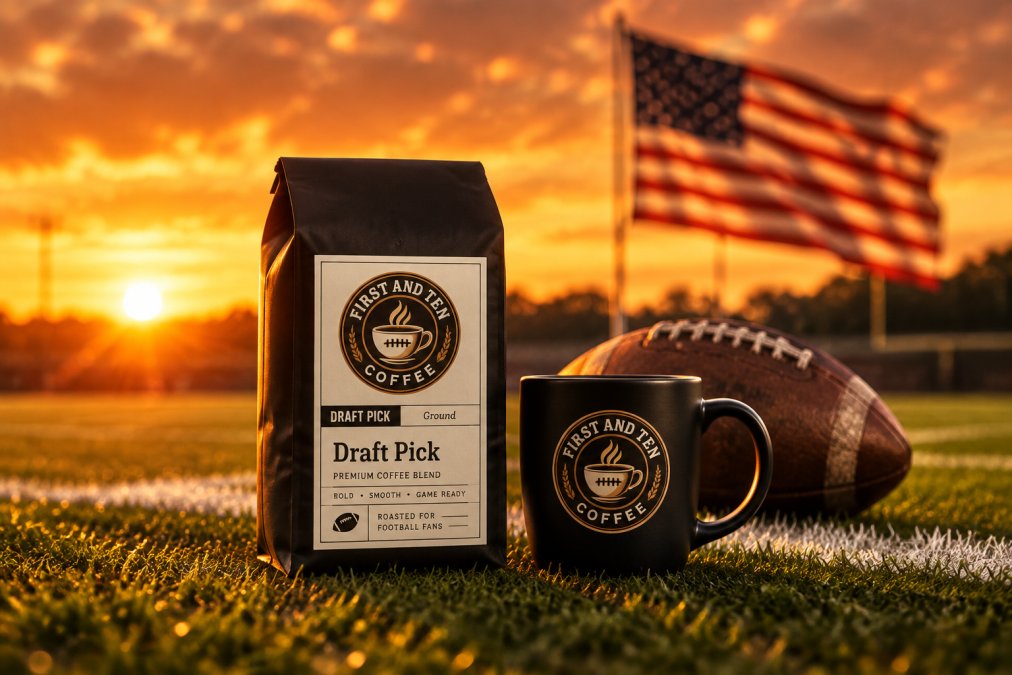
First and Ten Coffee is our top pick because it roasts to order, which means your beans hit the grinder days after roasting rather than weeks.
The lineup covers real ground. The flagship First and Ten is a medium roast blend of Central and South American coffees with nutty, sweet chocolate, and mild citrus notes and a clean, bright finish.
- Cowboy Blend: dark and medium blend with cocoa, caramel, vanilla
- Grumpy Rachel: post-roast blend balancing brightness and depth
Pricing and Value
Every bag is $21.99, sold as a one-time purchase, with no forced subscription. That's a straightforward value story: you pay for the coffee, not a recurring commitment you might forget to cancel.
Pros: roast-to-order freshness, transparent single-origin details, no lock-in. Cons: premium price versus supermarket bags, and you'll want to plan ahead for delivery.
2. West Coast Offense: The Everyday Breakfast Blend
Some mornings call for a coffee that just works, and West Coast Offense fills that role.
West Coast Offense is $21.99. It's the least fussy option in the lineup, which makes it a smart starting point if you're moving off a supermarket brand and don't want a flavor shock.

The trade-off is character. If you want a coffee that surprises you, look at the single origins instead.
3. Single-Origin Standouts: Sumatra, Ethiopia, Peru, and Guatemala
If you want to taste a place rather than a blend, the single origins are where this lineup earns its keep. Each bag lists the region, altitude, varietal, and processing method.
| Coffee | Roast | Flavor Notes | Region |
|---|---|---|---|
| Sumatra | Medium | Dark chocolate, dried fruit, earthy | Aceh, Takengon |
| Ethiopia Natural | Medium-light | Milk chocolate, fruity, caramel | Sidama Zone |
| Peru | Medium | Salted caramel, silky sweet, citrus | Piura, Amazonas |
| Guatemala | Medium | Dark chocolate, bright fruit, butterscotch | Antigua |
All four are $21.99. The Sumatra brings a syrupy body and long finish. Ethiopia Natural is the fruity, bright pick. Peru leans sweet and silky, and Guatemala splits the difference with dark chocolate and bright fruit.
Coffee Subscription Price Comparison
Here is the honest math, with real numbers you can check against each roaster's site as of October 2026. We normalized every option to a 12-ounce bag yielding roughly 24 six-ounce cups, which is a common drip-strength ratio. Your cost per cup will move with brew strength and bag size, but this gives you an apples-to-apples starting point.
| Option | Bag Price | Cost Per 6-oz Cup | Subscription Required? | Shipping Notes |
|---|---|---|---|---|
| First and Ten blends | $21.99 | ~$0.92 | No, one-time purchase | Flat-rate shipping; free over a published threshold |
| First and Ten single origins | $21.99 | ~$0.92 | No, one-time purchase | Same as above |
| Supermarket whole-bean bag (12 oz) | $9.99-$14.99 | ~$0.42-$0.62 | No | No roast date on most bags |
| Large national subscription roaster (12 oz) | $16.00-$24.00 | ~$0.67-$1.00 | Yes, recurring | Free shipping on most plans |
| Grocery-store whole-bean club (12 oz) | $12.00-$18.00 | ~$0.50-$0.75 | Optional | Varies by retailer |
The premium you pay for a roast-to-order bag is roughly $0.30 to $0.50 per cup over a supermarket bag. Whether that is worth it depends on how much you notice the difference.
What the price does not tell you
A lower bag price can hide a higher true cost. If a subscription ships every two weeks whether you need it or not, you may end up throwing away stale bags, which raises your effective cost per cup well above the sticker price. A one-time purchase model like First and Ten's avoids that because you reorder when you actually run low.
Shipping and subscription terms to check before you commit
- Shipping threshold: Many roasters advertise "free shipping" but only above a $30-$50 order. Check the threshold before you compare bag prices.
- Cancellation flexibility: Some subscriptions require 48 hours' notice before the next charge. Others let you cancel in the account dashboard. Know which one you are signing up for.
- Delivery frequency: Weekly, biweekly, and monthly are common. Match the frequency to how much coffee your household actually drinks, not to the discount the roaster dangles.
- Roast date on arrival: A bag that ships two days after roasting and arrives in three days is a five-day-old bag. A bag that ships a week after roasting is a different product. Ask before you buy.
The bottom line: if you drink one cup a day, the difference between a supermarket bag and a roast-to-order bag is roughly $9 to $15 a month. That is the real price of freshness, and it is the number worth weighing against your coffee budget.
Coffee Subscriptions with Customizable Delivery
Flexibility is where most coffee subscriptions lose people. You travel for work, you drink less one month, and suddenly you're drowning in bags you didn't need.
The fix is simple: choose a service that lets you skip, pause, or order on demand.
For anyone who has been burned by a locked-in subscription, that's the feature that matters most. Order Opening Kickoff or Cowboy Blend when you need them, and skip the guilt.

Freshly Roasted Coffee Beans Delivered: What to Expect
Freshly roasted coffee beans delivered to your door should arrive within days of roasting, smell intensely of the origin, and carry a printed roast date you can verify. If a bag arrives smelling flat or dusty, that's your signal.
Store beans in an airtight container away from light and heat, and grind right before brewing. Whole bean keeps far longer than ground coffee, so buy whole bean if you own a grinder.
That's the whole case for switching. Fresher beans, clearer sourcing, and delivery terms that respect your schedule.
Frequently Asked Questions
What are some good alternatives to Fresh Roasted Coffee?
First and Ten Coffee is a strong alternative if you want freshly roasted coffee beans delivered on a roast-to-order schedule. Their lineup includes medium blends like First and Ten and West Coast Offense, plus single-origin options such as Sumatra, Ethiopia Natural, Peru, and Guatemala, all priced at $21.99 per bag. Each bag is roasted after you order, which means the beans reach you closer to peak flavor than supermarket stock that may sit for weeks.
Are freshly roasted coffee beans better than store-bought?
Freshly roasted coffee beans generally taste better because the volatile oils that carry aroma and flavor peak in the days and weeks after roasting. Beans roasted to order and shipped quickly retain more of those compounds than bags that have been warehoused. Look for a visible roast date on the bag, and plan to brew within four to six weeks of that date for the brightest cup.
How do coffee subscriptions compare on price and delivery flexibility?
Most coffee subscription price comparison comes down to cost per bag and how often you can change your delivery. First and Ten's bags are $21.99 each, and you can adjust your order cadence to match how much you actually drink. If you travel or drink less some months, a flexible schedule prevents bags from piling up. Always check whether you can skip, pause, or reschedule shipments before committing.
Can I choose my roast level with a coffee subscription?
Yes. First and Ten offers a range of roast levels, from the light roast Brand New Season and the light-medium Opening Kickoff to medium blends like First and Ten and West Coast Offense, plus the dark-and-medium Cowboy Blend. If you prefer bright, fruity flavor notes, start with a lighter roast. If you want bold, chocolatey depth, choose a darker option like Sumatra or Cowboy Blend.
How often should a coffee subscription deliver beans?
Match the delivery frequency to your brewing volume. A single 12-ounce bag makes roughly 16 to 20 cups, so a household brewing one cup a day might need a bag every two to three weeks, while a two-cup-a-day household may need one weekly or every other week. Choose a customizable delivery interval and adjust after the first month once you know your actual consumption rate.
Finding a roaster that ships within days of roasting, prints the roast date, and lets you order on your terms is harder than it should be. First and Ten Coffee roasts to order, sources beans from trusted farms with full regional detail on every bag, and sells by the bag with no subscription lock-in. Start your day with a fresh set of downs and taste what roast-to-order actually means.