

Why Specialty Coffee Costs More: A Price Breakdown
Table of Contents
- Why Specialty Coffee Costs More Than You Think
- Specialty Coffee vs Regular Coffee: What the Grade Actually Means
- The Specialty Coffee Price Breakdown, From Farmgate to Your Door
- How Coffee Sourcing Affects Price
- Growing Conditions, Labor, and Lower Yields
- Do Higher Retail Prices Reach Coffee Farmers?
- Is Specialty Coffee Worth It? A Framework for Choosing
- Conclusion
- Frequently Asked Questions
Last Updated: October 18, 2026
Why Specialty Coffee Costs More Than You Think
Specialty coffee costs more because the beans are grown at higher altitudes, picked by hand, sorted for defects, and roasted in small batches, all of which drive up labor and production costs before the coffee ever reaches a shelf.
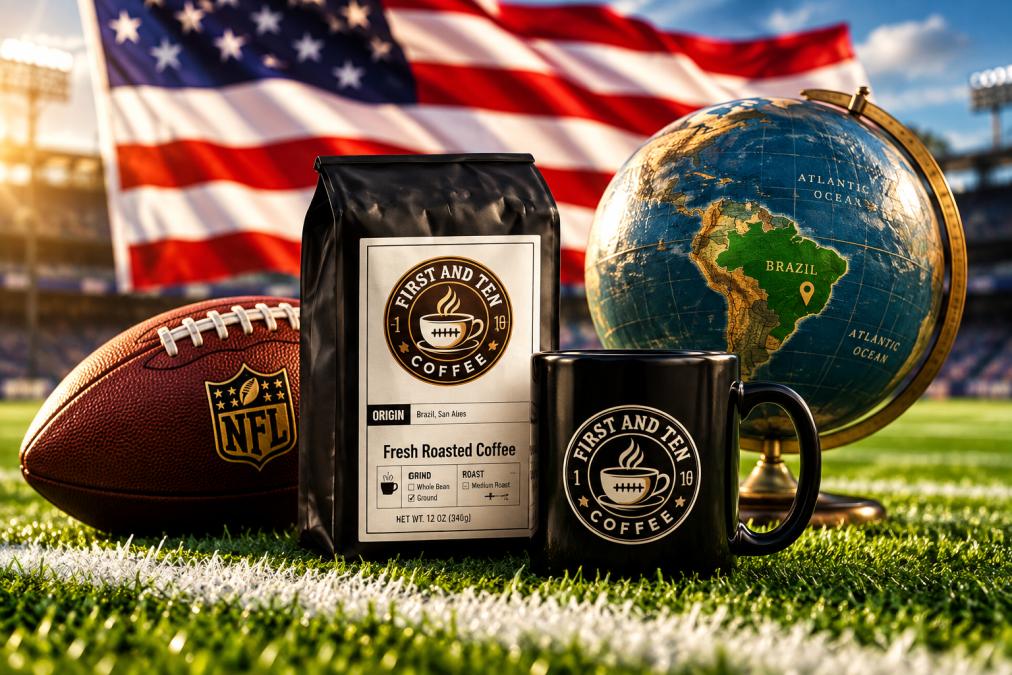
Here's the part most price complaints miss: you're not paying extra for a fancier label. You're paying for a different production model.
Below, we break down where the money actually goes, from farmgate to your door, and how to judge whether a bag is worth the premium.
Specialty Coffee vs Regular Coffee: What the Grade Actually Means
Specialty coffee is coffee that scores 80 points or higher on a 100-point scale under the grading system used by the Specialty Coffee Association, while regular or commodity coffee typically falls below that threshold.
The practical difference is not snobbery. An 80-plus score means the coffee has recognizable flavor character and no primary defects. Commodity coffee is graded for consistency and volume, which is why it usually tastes flat and why it's cheap.
That grading step costs money: trained cuppers, sample roasting, and repeated evaluation before a lot is approved.
The Specialty Coffee Price Breakdown, From Farmgate to Your Door
A specialty coffee price breakdown has four main layers: what the farmer is paid, what processing and export cost, what shipping and import add, and what roasting, packaging, and retail contribute. Each layer is smaller in volume and higher in cost than the commodity equivalent.
Below is a transparent, assumption-based model. The percentages are illustrative ranges, not audited figures, they shift with origin, lot size, freight rates, and roast volume, but the mechanics are what matter. Use them to sanity-check any bag's price rather than to predict an exact invoice.
Layer 1: Farmgate and Harvest
The farmgate price is what a farmer receives for ripe cherries or dried parchment before any middleman touches the lot. Specialty lots demand selective hand-picking, often multiple passes over the same trees, plus careful processing like fully washed fermentation or drying on raised beds.
A common pattern: a farmer who sells to a commodity mill is paid on volume with little regard to defect count, while a specialty buyer pays a negotiated premium for cherry that is picked ripe and delivered quickly.
Layer 2: Processing, Milling, and Export
After harvest, the lot is processed (washed, natural, honey, or an experimental method), dried to a stable moisture level, milled to remove parchment and defects, bagged in export-ready liners, and moved to port.
This is where the first big efficiency gap opens. A container of commodity coffee fills a shipment with one homogeneous lot; a specialty roaster may buy a few hundred pounds of a single farm's output, which means the freight and documentation cost per pound is materially higher.
Layer 3: Shipping, Import, and Duties
Ocean freight, insurance, port handling, customs brokerage, and any applicable duties land here. Freight rates move with fuel and global capacity, so this layer is the most volatile in the stack. A small specialty lot also tends to ship less than container-load, which adds consolidation and handling charges that a full container avoids.
Layer 4: Roasting, Packaging, and Retail
Roasting adds green-coffee weight loss (beans lose moisture and mass during the roast), plus the cost of the roaster's time, gas or electricity, quality control, and packaging. Small-batch roasting to order means less efficiency per pound than industrial roasting at scale, the roaster is not running a continuous line, and every batch carries setup and cooling time.
Packaging with a one-way valve, a roast date, and origin detail costs more than a plain bag. Retail then adds either shelf space and staff (for a cafe or grocery) or fulfillment and shipping (for direct-to-consumer).
Reading the Stack
The practical takeaway is that specialty coffee is not one markup but several small, defensible cost increases stacked on top of each other. When a bag costs more, ask which layer is doing the work: is it a rare small lot (Layer 2), air-freighted freshness (Layer 3), or a roast-to-order operation (Layer 4)? A roaster who can explain the stack is usually the one whose premium holds up.
How Coffee Sourcing Affects Price
How coffee sourcing affects price comes down to traceability and risk. When a roaster buys directly from a specific farm or cooperative, they pay for relationship, verification, and often a quality premium above the commodity market rate. That transparency is expensive to maintain, but it's the only way to know what you're drinking.
Our Kenya lot is traceable to Othaya in Nyeri County, grown at 1,700 to 1,890 meters. Our Uganda lot comes from Sipi in the Kapchorwa District. Sourcing at that level of specificity means paying for the farm's work, not a blended anonymous lot.

Growing Conditions, Labor, and Lower Yields
High altitude and shade-grown conditions produce denser beans with more flavor complexity, but they also produce lower yields per tree.
Add climate risk and crop risk on top. Specialty farms are often small-scale operations in mountainous regions where one bad season can wipe out a harvest. Buyers who want consistent quality pay a premium to keep those farms viable year after year.
Labor is the other half of the equation. Selective hand-picking, sorting, and processing are all done by hand on most specialty farms, and those wages are a real production cost, not a rounding error.
Do Higher Retail Prices Reach Coffee Farmers?
Higher retail prices do not automatically reach coffee farmers, and that gap is the most uncomfortable fact in the specialty coffee price breakdown. A retail premium only reaches the producer when the buyer structures the purchase that way, through direct trade, long-term contracts, or transparent pricing. The shelf price and the farmgate payment are two different numbers, and nothing about a fancy label guarantees the second one moved.
Why the Premium Can Stop Short
Most coffee changes hands several times between the tree and the roaster. A common pattern is: farmer sells cherry or parchment to a local buyer or cooperative, the cooperative sells to an exporter, the exporter sells to an importer, and the importer sells to the roaster. Each intermediary provides a real service, aggregation, milling, financing, logistics, risk-bearing, and each takes a margin.
The uncomfortable mechanism is that a roaster can charge more for "specialty" without changing what it pays at origin. Quality claims and payment claims are separate, and only one of them shows up on the bag.
What Actually Moves Money to the Farm
Three structures tend to move a premium upstream:
- Direct and relationship contracts. The roaster or importer contracts with a specific farm or cooperative, often before harvest, and agrees on a price or a price floor. This reduces the farmer's risk and creates a paper trail from lot to shelf.
- Published pricing and transparency reports. Some roasters publish what they paid at farmgate (often expressed as a multiple of the commodity market price, such as the Fair Trade minimum or a "farmgate price" figure). A published number is checkable; a vague "we pay farmers well" is not.
- Long-term commitments and quality premiums. Multi-year buying commitments and explicit premiums for cup score or defect count give the farmer a reason to invest in quality and a buffer against a bad season.
The Honest Limits of Transparency
Even well-intentioned transparency has limits. A farmgate price does not tell you the farmer's net after labor, processing, and transport. A cooperative's payment to members may be pooled and delayed.
That is why the useful question is not "is this bag expensive?" but "can the roaster show me the chain?" A roaster who names the farm, the region, the altitude, and the process, and who can describe the contract structure, is giving you something checkable. A roaster who cannot is asking you to trust a label.
We think the honest answer is that some of the premium reaches farmers and some doesn't, and roasters who publish their sourcing are the ones worth trusting.
Is Specialty Coffee Worth It? A Framework for Choosing
Specialty coffee is worth it when you value flavor clarity, freshness, and traceable sourcing enough to pay for them, and it isn't worth it if you mainly want caffeine at the lowest cost per cup. Use this framework to decide:
| Question | If yes | If no |
|---|---|---|
| Do you drink coffee black or with minimal milk? | Specialty flavor shows through | Commodity may suit you |
| Does the bag list region, altitude, and process? | Traceable, likely worth it | Skip the premium |
| Is there a roast date, not just a best-by date? | Freshness is real | You're paying for packaging |
| Is the price per cup within your budget? | Buy with confidence | Try a smaller bag first |
| Does the roaster explain sourcing? | Premium is defensible | Ask before buying |
Cost per cup is the number that actually matters. A $21.99 bag of single-origin beans brewed at home lands far below a daily cafe habit, which reframes the premium as a value question rather than a splurge.
Our 4th and Goal, a single-origin Guatemalan aged 30 days in a Bourbon barrel and roasted to order, is a good test case: the barrel aging is a cost the farmer and roaster both absorb, and you can taste whether that's worth it to you.

Conclusion
The real challenge is that most coffee buyers never see the price breakdown, so the premium looks arbitrary. It isn't. It's altitude, hand-picking, sorting, small-batch roasting, and traceable sourcing, each adding cost that commodity coffee skips.
At First and Ten Coffee, we roast to order so the freshness you pay for actually arrives fresh, source beans from trusted farms with named regions and altitudes, and keep ordering simple with fast, reliable delivery. Start your day with a fresh set of downs and taste what the premium buys.
Frequently Asked Questions
Why does specialty coffee cost more than regular coffee?
Specialty coffee costs more because it is produced in smaller quantities at every stage. Selective hand-picking, high-altitude farms with lower yields, careful sorting and processing, and small-batch roasting all add cost that commodity coffee avoids through volume and mechanization. A bag of specialty coffee also usually carries a farmgate price well above commodity rates, plus shipping, roasting, and packaging costs that a supermarket bag spreads across millions of units.
How does coffee sourcing affect the price I pay?
Sourcing decides most of the price before the beans ever reach a roaster. Coffee bought directly from a single farm or cooperative, with traceability back to the lot, costs more than coffee bought through commodity traders on an exchange. Direct sourcing adds relationship costs, quality checks, and often a higher price paid to the producer. It also limits supply, since a single farm produces only so many bags per harvest.
Is specialty coffee worth the extra cost?
It depends on how you drink coffee. If you brew at home and notice flavor differences, specialty beans roasted to order usually deliver more complexity per cup than a supermarket bag of unknown roast date. If you mostly drink coffee with milk and sugar, the gap narrows. A practical test: compare cost per cup, not cost per bag. A $21.99 bag of single-origin beans that makes roughly 16 to 20 cups often lands near $1.10 to $1.40 per cup.
Does freshly roasted coffee cost more?
Freshly roasted coffee usually costs more than supermarket coffee because roast-to-order production cannot run at the same scale. Roasting in small batches means higher per-bag labor and energy costs, and coffee sold soon after roasting has a shorter shelf life, so it moves through smaller, more frequent orders. The tradeoff is flavor: coffee is at its best in the weeks after roasting, and the roast date on the bag is the clearest proof of freshness.