

Is Your Coffee Ethically Sourced? A Practical Guide
Last Updated: October 26, 2026
Quick Summary
Ethically sourced coffee is bought in ways that protect farmers, workers, and ecosystems, covering fair pay, safe labor conditions, environmental care, and traceable supply chains. Because labels alone don't guarantee these outcomes, verify claims by checking whether the roaster names the farm or cooperative, explains what any certification covers, and lets you trace the lot to an origin.
- Coffee compliant with voluntary sustainability standards was 24%-42% of global production in 2023, but only about 51% of certified coffee was sold as certified.
- The farmgate price, what a farmer receives at point of sale, determines whether a growing household earns a living income.
- Ask what the farmer received per pound, when, and how it is documented, not just whether a premium was paid.
- Annual audits can miss harvest-season labor abuses, so third-party audits reduce risk but do not eliminate it.
- Direct trade has no universal legal definition, so the term means whatever the buyer says it means.
Table of Contents
- What Ethical Sourcing in Coffee Actually Means
- Coffee Farmer Wages: Why the Farmgate Price Decides Everything
- Labor Rights, Child Labor, and Working Conditions on the Farm
- Coffee Certifications: What Each Label Verifies and What It Doesn't
- Coffee Supply Chain Transparency: Tracing Beans Back to the Lot
- Direct Trade Coffee and Long-Term Buyer-Producer Relationships
- Environmental Impact, Climate Risk, and Smallholder Economics
- How to Verify an Ethical Claim Before You Buy
- Frequently Asked Questions
What Ethical Sourcing in Coffee Actually Means
Ethically sourced coffee is bought in ways that protect the farmers, workers, and ecosystems behind every bag. It covers fair pay, safe labor conditions, environmental care, and traceable supply chains.
Here's the uncomfortable truth: most "ethical coffee" content stops at the word "sustainable" and never explains who checks the claim. That's the gap we want to close.
The scale of the issue is real. According to the IISD Global Market Report on coffee sustainability, coffee compliant with voluntary sustainability standards accounted for 24%-42% of global production in 2023.
That single statistic explains why this guide focuses on verification. Below, we'll walk through wages, labor rights, certifications, traceability, and the checks you can run before you buy.
Coffee Farmer Wages: Why the Farmgate Price Decides Everything
The farmgate price is what a farmer receives at the point of sale, before transport, processing, or export costs. For a full price breakdown from farmgate to retail, see how the money splits and why farmgate prices matter.
Smallholder farmers grow most of the world's coffee, and their economics are thin. Price premiums only help if they reach the farm.
How the Price a Farmer Sees Is Built
Most coffee is priced in reference to a published futures benchmark, then adjusted by a differential, a premium or discount for origin, grade, cup quality, and processing method. The farmer's farmgate price is typically derived from that export price minus the costs between farm and port: milling, grading, bagging, transport, export documentation, and the cooperative's or exporter's margin. Two coffees can carry the same retail price and very different farmgate prices depending on how much of that chain the farmer's organization controls.
How Price Premiums Reach the Farm
Premiums reach farmers through three main channels: direct purchase contracts, certification premiums, and cooperative structures. The catch is that a premium paid at the exporter level does not automatically land in a farmer's pocket. A common mistake is assuming a "fair trade premium" on a label means a specific dollar amount reached the grower. It means a structure exists, not that the outcome was measured.
Payment timing matters as much as the amount. A farmer paid at harvest versus one paid months later faces very different cash-flow realities, because labor and inputs are paid up front.
The question to ask is not "was a premium paid?" but "what did the farmer receive per pound, when, and how is that documented?" Those three answers separate a real sourcing commitment from a marketing claim.
Why Farmgate Price Is a Living-Income Issue
A living income is what a household needs to cover food, housing, health care, education, and a modest buffer. When the farmgate price covers production costs but not a living income, the gap is closed by off-farm work, diversifying crops, or borrowing, not by the coffee. That is why conversations about ethically sourced coffee that stop at "fair prices" miss the mechanism: the farmgate price, net of costs, is what determines whether coffee farming can support the household that grows it.
Labor Rights, Child Labor, and Working Conditions on the Farm
Labor rights in coffee cover fair wages, safe working conditions, freedom of association, and the elimination of child and forced labor. These risks concentrate at the farm level, where oversight is hardest and most of the workforce is informal.
A systematic review by D. R. Wright and colleagues on sustainable coffee initiatives developed a typology of eleven sustainability initiatives, showing how varied the approaches to governance and labor standards are.
Watch out: a certification that audits labor conditions once a year cannot catch seasonal abuses that happen between visits. Third-party audits reduce risk; they do not eliminate it.
Coffee Certifications: What Each Label Verifies and What It Doesn't
Coffee certifications are third-party programs that verify specific practices against published standards. Each one checks a different set of criteria, and none of them verifies everything. That's the part most buyers miss, and it's where a label stops being a guarantee and becomes a signal you have to interpret. Understanding what makes coffee beans specialty grade helps you see what quality claims actually verify beyond certification labels.
| Certification | What It Verifies | What It Doesn't Guarantee |
|---|---|---|
| Fair trade programs | Minimum price floors, social premiums, some labor criteria | Living income for every farmer; that the premium was reinvested as intended |
| Organic labels | Avoided synthetic inputs, handling and separation standards | Fair wages, labor conditions, or farmer profitability |
| Sustainability standards | Environmental and farm management criteria, some labor criteria | That beans are sold as certified; continuous compliance between audits |
| Direct trade claims | Buyer-producer relationship (self-defined) | Independent third-party audit or a published standard |
What Certification Actually Checks
Most schemes combine three things: a standard (the rules), an audit (the check), and a chain of custody (the paper trail that keeps certified beans separate from conventional ones). The audit is usually an annual or periodic visit by a third-party body, sampling records and fields against the standard. Chain of custody is where schemes diverge most: identity-preserved models keep certified coffee segregated from farm to roaster, while mass-balance models allow certified and conventional beans to be mixed administratively as long as volumes are accounted for. Both can be legitimate; they answer different questions. Identity-preserved tells you the bag traces to a certified lot.
The Trade-Offs Buyers Should Know
- Audit frequency vs. seasonal risk. An annual audit can miss harvest-season labor abuses that occur between visits. Third-party audits reduce risk; they do not eliminate it.
- Standard breadth vs. depth. A scheme that covers many criteria may verify each one less intensively than a narrow scheme. More checkboxes is not the same as stronger assurance.
- Cost pass-through. Certification costs, audits, fees, record-keeping, are real, and on a small farm they can be a meaningful share of the crop's value. That cost is one reason certified coffee often needs a buyer willing to pay for it.
- Market uptake. The IISD finding that roughly 51% of certified coffee is sold as certified is the clearest evidence of the gap between verification and market reality. A farmer can hold a certificate and still sell most of the crop as conventional.
A certification logo tells you a standard was applied and audited at a point in time. It does not tell you the farmer earned a living income, that the premium reached the farm, or that conditions were compliant on the day you bought the bag. Treat it as one input, not a verdict.
Coffee Supply Chain Transparency: Tracing Beans Back to the Lot
Coffee supply chain transparency is the ability to trace a bag of beans back to the specific farm, cooperative, or lot it came from. Traceability is the mechanism; transparency is what a roaster chooses to disclose about it.
Traceability usually runs through lot numbers, purchase records, and cooperative documentation. Full lot-level traceability is uncommon in blended coffees and far more achievable in single-origin offerings. If you want to put transparency into practice, single origin coffees let you trace beans to a named lot and origin.
Direct Trade Coffee and Long-Term Buyer-Producer Relationships
Direct trade coffee refers to purchasing arrangements where a roaster buys directly from producers or cooperatives, typically outside certification frameworks. The model's strength is relationship depth. Its weakness is that "direct trade" has no universal legal definition, so the term means whatever the buyer says it means.
Long-term partnerships change farmer economics more than one-off premium purchases, because producers can plan, invest, and hire with confidence. A case study by J. F. Proença and colleagues on Delta Cafés examined how purchasing practices and supply chain approaches shape sustainability outcomes. Buying coffee from a named origin is one way to support direct relationships with a specific producing region.
Environmental Impact, Climate Risk, and Smallholder Economics
Climate risk hits smallholder farmers hardest. Drought, shifting rainfall, and rising temperatures threaten yields, and a farmer with a single hectare has no buffer when a harvest fails. Environmental sustainability in coffee therefore isn't separate from farmer welfare. It's the same problem.
Shade-grown systems, biodiversity protection, and deforestation-free sourcing all reduce long-term risk. The Coffee Barometer 2026 assessment examines the proprietary sustainability programs of five of the largest green coffee traders, which is a useful check on how much of the industry's environmental work is independently verified versus self-reported.
How to Verify an Ethical Claim Before You Buy
Verifying an ethical claim means checking for evidence, not accepting the label. A buying guide to ordering freshly roasted coffee beans online helps you act on that verification with confidence. Use this checklist before you commit to a bag:
- Does the roaster name the farm, cooperative, or region?
- Is there a certification, and does the roaster explain what it covers?
- Is a roast date printed, not just a best-by date?
- Does the roaster publish sourcing practices or purchasing details?
- Can you trace the lot number to an origin?
The Global Coffee Platform's collective reporting on sustainable purchases tracks purchasing data across participating organizations, which is a useful reference for understanding how the industry measures its own claims.
Frequently Asked Questions
What does ethical sourcing mean in the coffee industry?
It covers how beans are grown, picked, bought, and moved to market. In practice that means farmers earn a fair price for their crop, workers pick and process coffee under safe conditions with no child or forced labor, and the environment around the farm is protected. Ethical sourcing also requires proof: records that show where a lot came from and how the grower was paid. Without that trail, an ethical claim is just a word on a bag.
How can you tell if coffee is ethically sourced?
Look for a specific claim you can trace. A certification label with a verification body behind it is one route. A named producer, region, or washing station on the bag is another. Ask the roaster how the coffee was purchased and what the farmer was paid above the commodity price. IISD reported that only about 51% of certified coffee in 2023 was actually sold as certified, so the label alone does not prove the sale channel. Specificity beats logos.
Can coffee be ethically sourced without certification?
Yes. Direct trade coffee is the clearest example: a roaster buys straight from a producer or cooperative, often at a negotiated premium, without a third-party certificate. The trade-off is that the buyer's own records replace an outside audit. Ask what the relationship looks like, how long it has run, and whether pricing is published. A roaster who can name the farm and describe the purchase terms is giving you more than a sticker does.
How does ethical coffee sourcing affect coffee farmers?
The biggest lever is the farmgate price, the amount paid at the point of sale. Higher and more stable prices let smallholder farmers cover labor, reinvest in the plot, and absorb a bad harvest. The Global Coffee Platform's 2022 snapshot recorded over 70% of reported purchases as sustainable coffee purchases, more than 26 million bags, which shows buyer commitments exist at scale. What matters for any single farm is whether that commitment shows up in the payment.
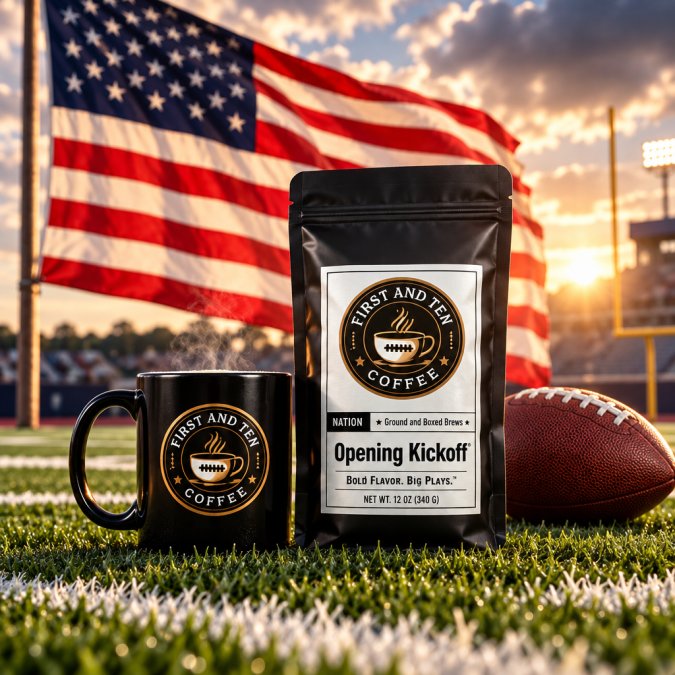
Most coffee brands ask you to trust a label. We'd rather you check the roast date and the origin. First and Ten Coffee roasts to order so every bag arrives fresh, sources beans from trusted farms, and delivers them straight to your door. Get started with First and Ten Coffee and taste the difference freshness makes in your morning routine.
